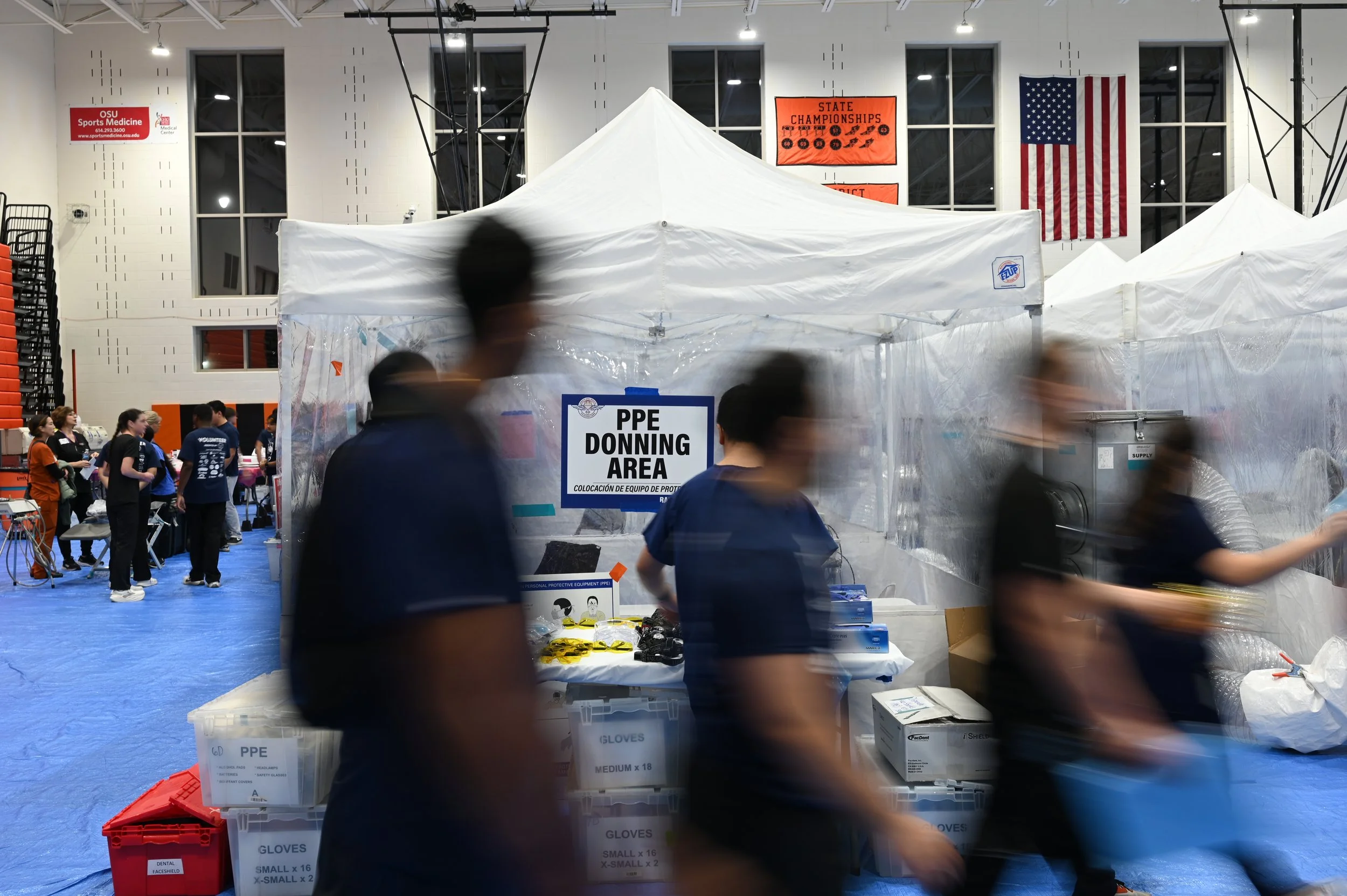
Dental volunteers walk past tents at a Remote Area Medical clinic in Columbus, Ohio, Nov. 8, 2025.
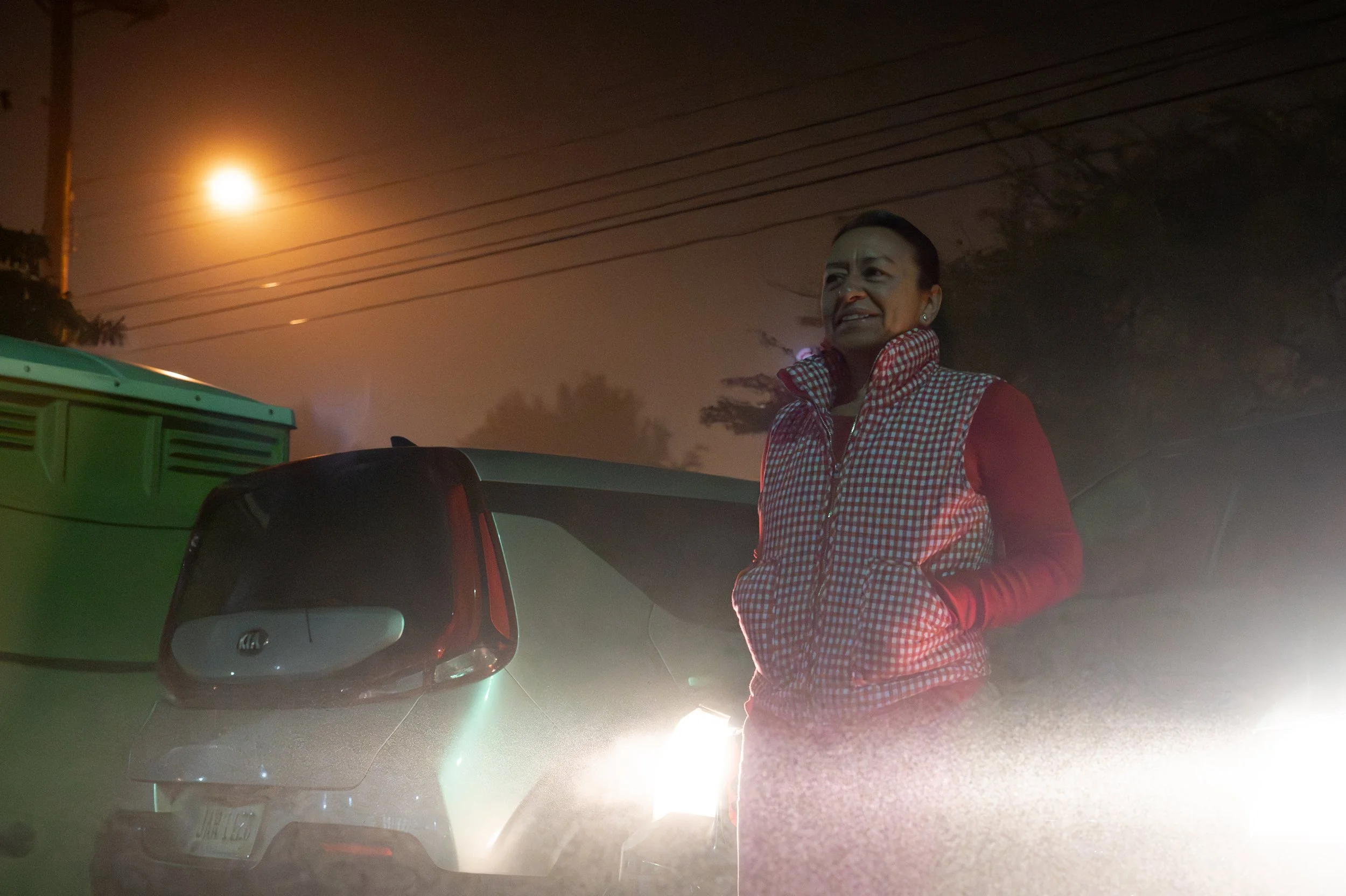
Elida, an uninsured immigrant from El Salvador, waits in the rain in front of East High School for the Remote Area Medical clinic to open its doors in Columbus, Ohio, Nov. 8, 2025. Patients could attend the clinic for free dental, vision, and medical care.
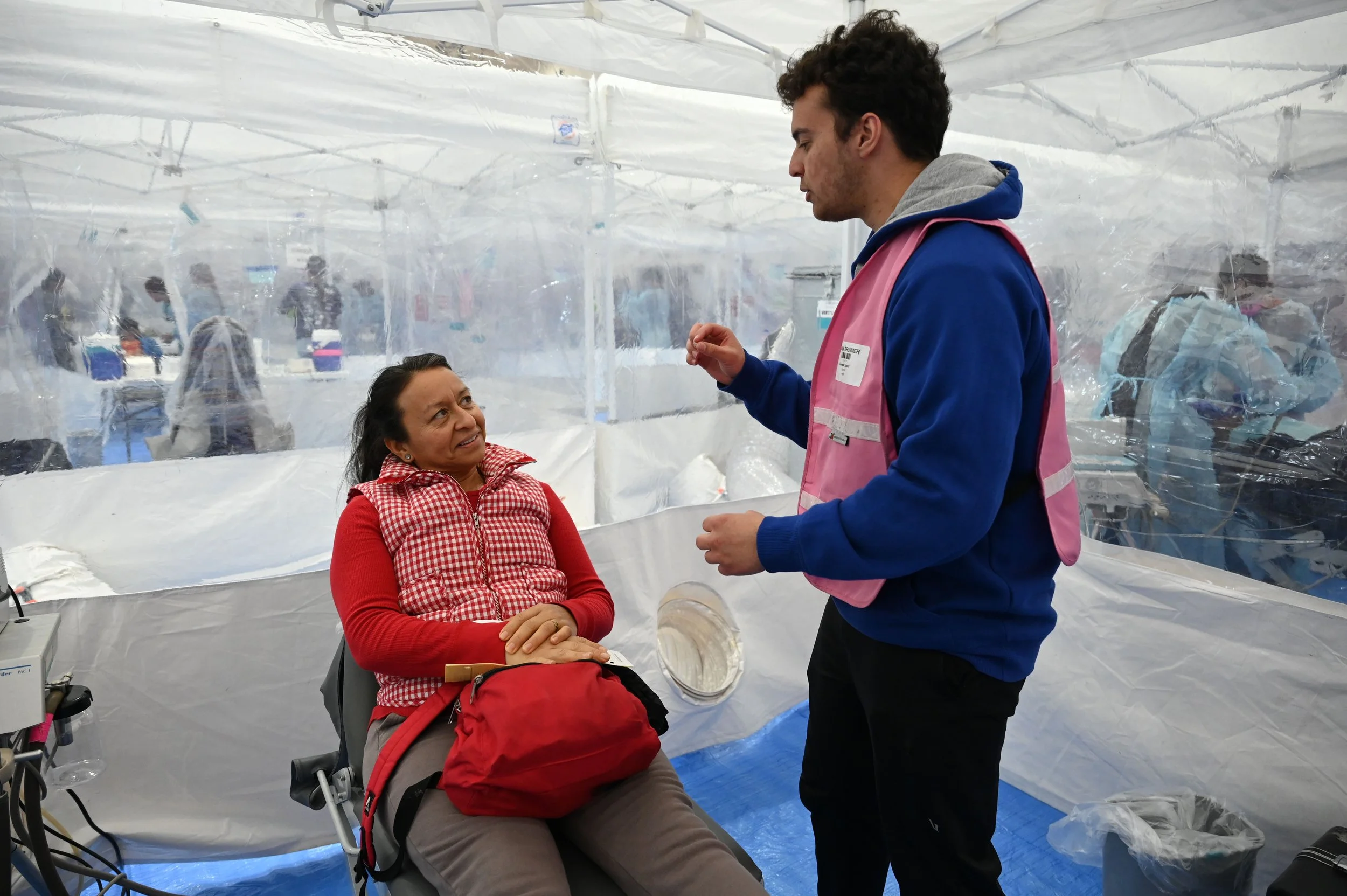
Aiden Brummer, a University of Kentucky student, talks to Elida in Spanish at a Remote Area Medical clinic in Columbus, Ohio, Nov. 9, 2025. Brummer served as her interpreter for dental services.
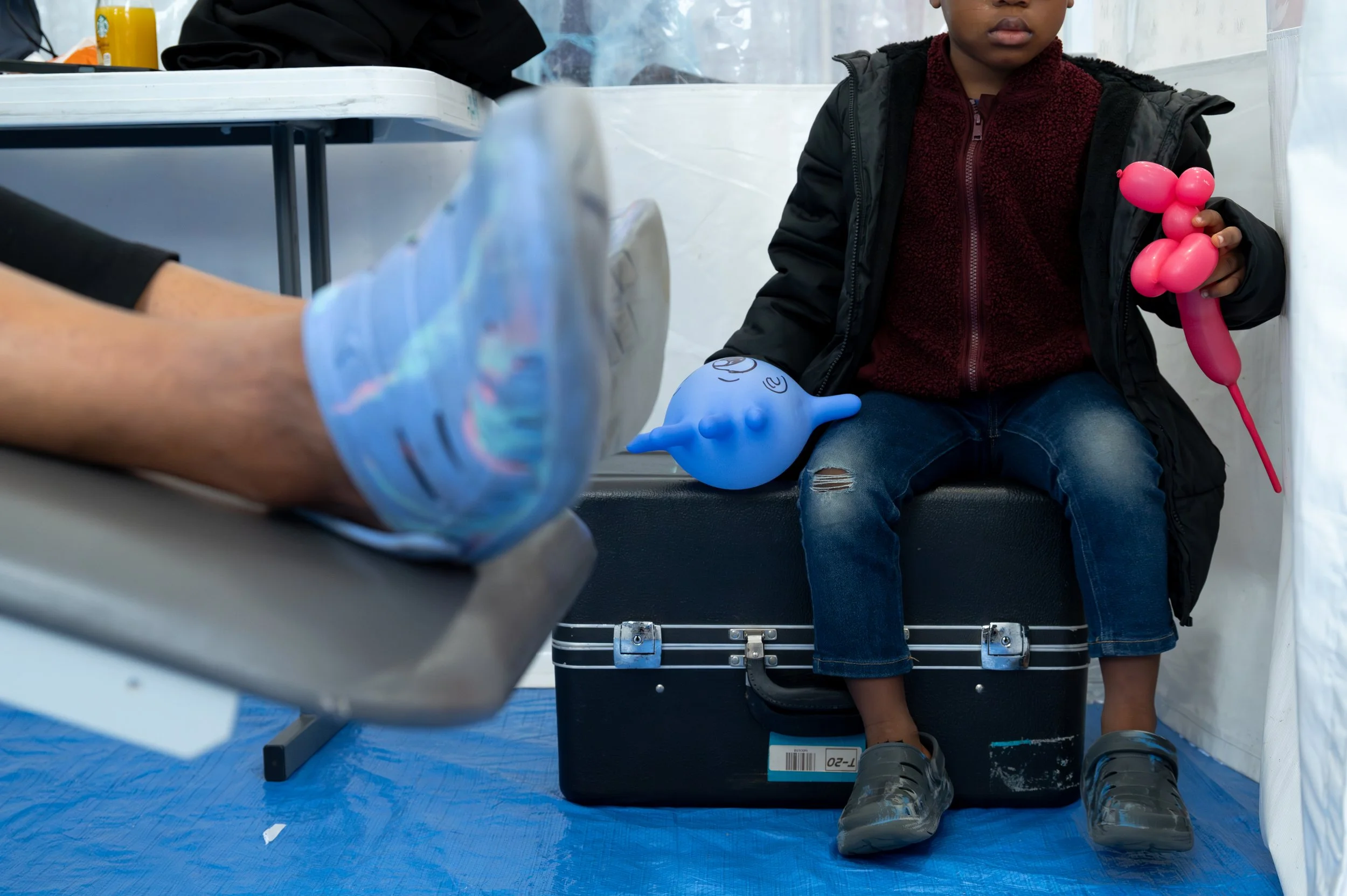
Davis, 4, holds two balloons while waiting for his mother, Lu, 48, to finish a dental cleaning at a Remote Area Medical clinic in Columbus, Ohio, Nov. 9, 2025.
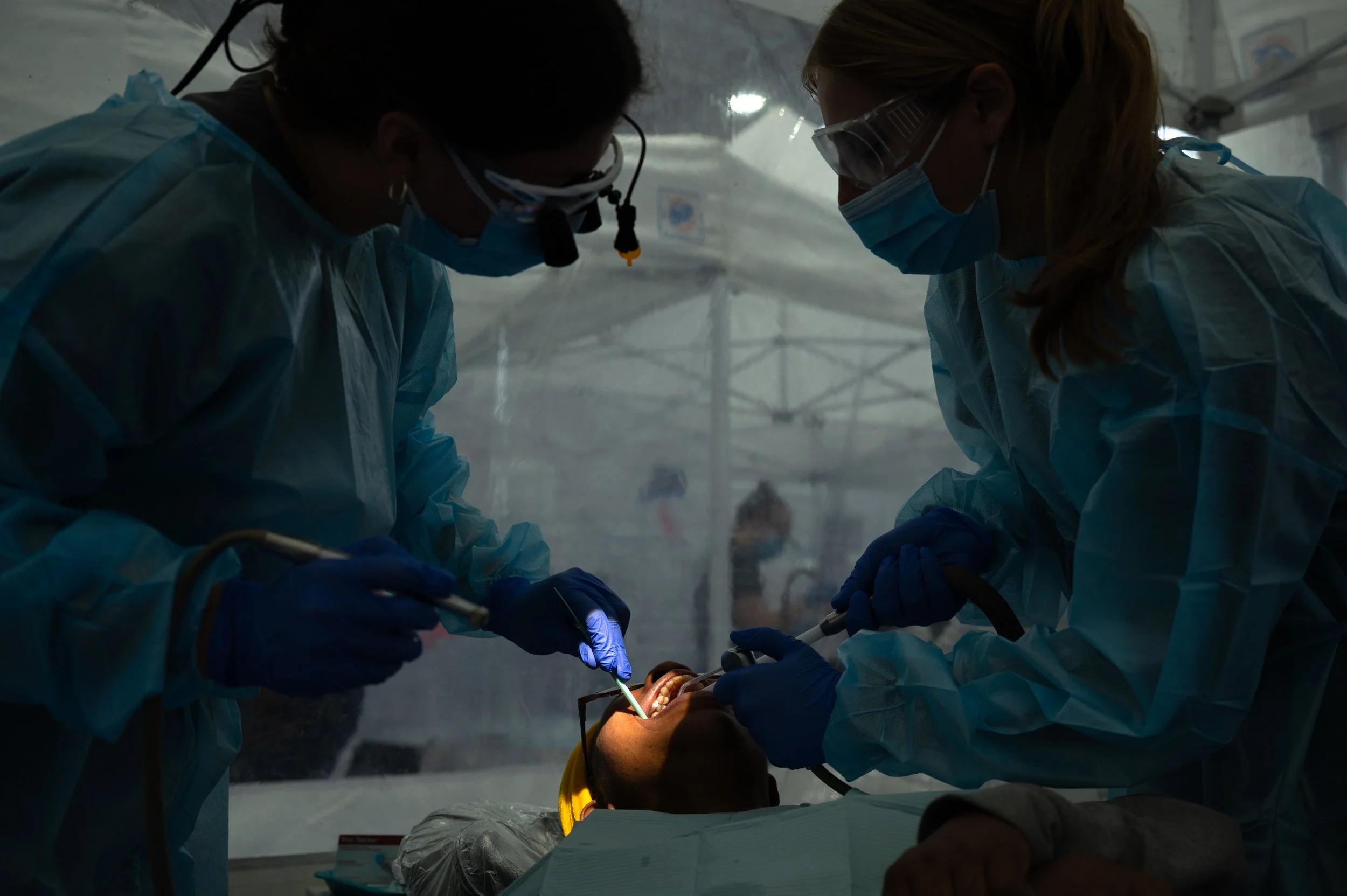
A dental student and undergraduate student from Ohio State University fill a cavity for Lu at a Remote Area Medical clinic in Columbus, Ohio, Nov. 9, 2025.
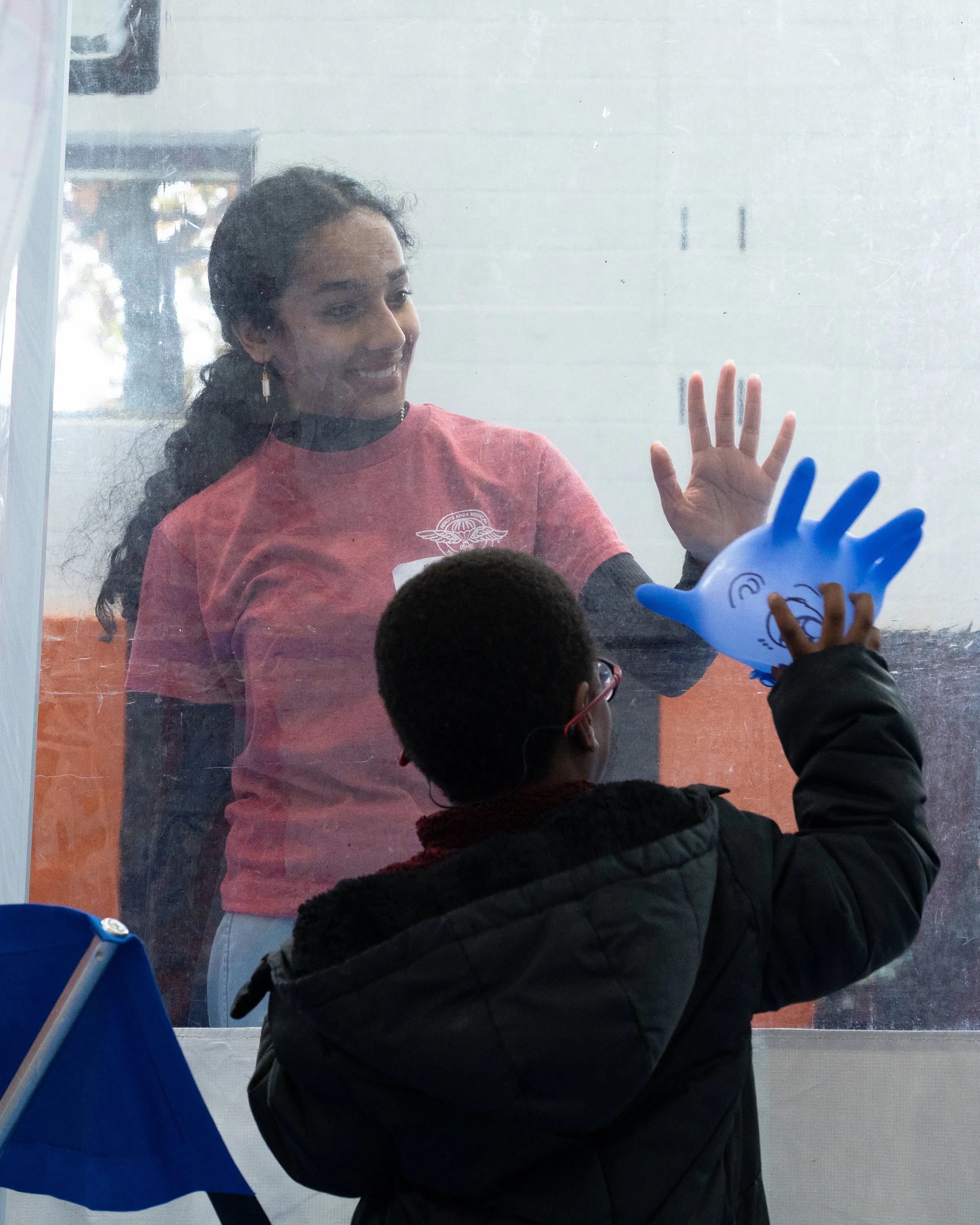
Fareeda Naduvil, 21, a Remote Area Medical volunteer from Case Western Reserve University, high-fives Davis through a tent at a Remote Area Medical clinic in Columbus, Ohio, Nov. 9, 2025.
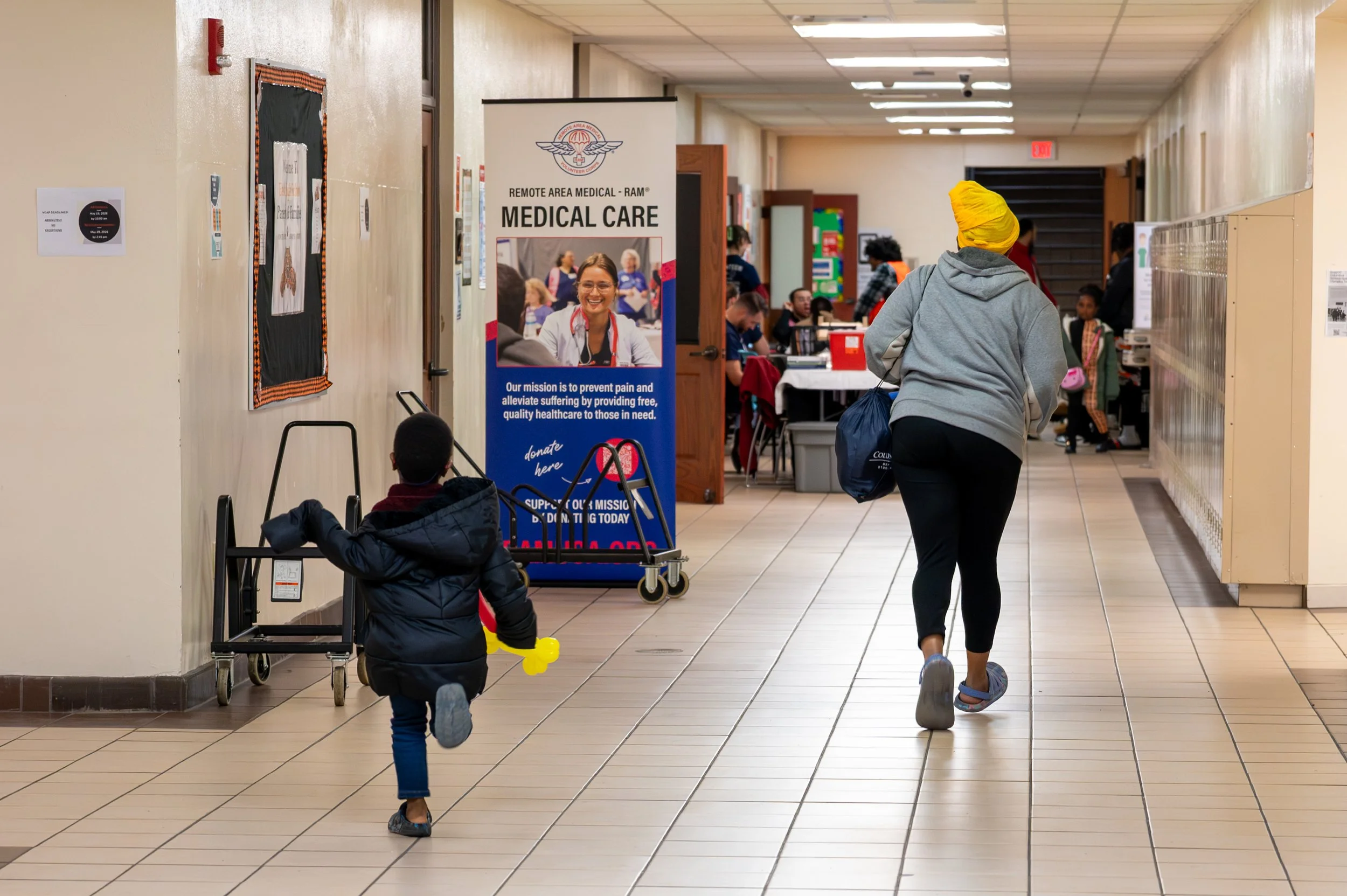
Lu and Davis run down a hall at East High School to get to the medical floor before it closes at a Remote Area Medical clinic in Columbus, Ohio, Nov. 9, 2025.
From Nov. 8 to 9, Remote Area Medical (RAM) held a free pop-up clinic at East High School in Columbus, Ohio. Patients were offered medical, dental, and vision services on a walk-in basis, without the need for insurance or identification. According to RAM’s website, roughly 500 patients received treatment over the course of the weekend, equivalent to an estimated $405,217 in services rendered.
Upon entry, patients register and select one of the three services to receive. Patients are then triaged, before receiving treatment. On the dental floor, patients received X-rays, cleanings, fillings, and extractions. The vision floor provided eye exams and eyeglass prescriptions. Finally, the medical section offered physicals and gynecology screenings.
Patients began waiting in the parking lot for the clinic on Friday night. The temperature reached roughly 36°F and a fog had settled in the early morning on Saturday. Yet, people continued entering the parking lot, braving the conditions in their cars or next to an outdoor heater assembled by volunteers.
Elias Figueroa Valdez, a local high schooler, unexpectedly found himself volunteering Saturday morning. “12 a.m., my dad woke me up. He said, ‘we’re going somewhere,’” said Valdez. When he asked where they were going, his father responded, “Grab your blanket, your toothbrush, food, and your homework. Go!” His parents were seeking a check-up, while Valdez needed new glasses. Little did Valdez know that he was also going to be serving his own community.
After arriving, Valdez began conversing with RAM volunteers, when they realized that he could speak Spanish fluently. Soon after, he worked alongside other volunteers, keeping track of patients and assigning them to a parking space. “It’s like a great way to just help out the community,” said Valdez.
One of the patients he helped translate for was a woman, who wanted to go by the name Elida for her safety. Originally from El Salvador, she found RAM last year, when her friend informed her that there was a clinic in the area. In Spanish, Elida said she was able to receive dental and vision care last year, even receiving a new pair of glasses. She added that it was a great blessing, considering she lacks insurance making it difficult to afford this care normally. However, she mentioned that the current political state has also influenced her community and her own healthcare choices, especially mass deportations.
“A lot of these laws are targeting a lot of people who are just hardworking people, who are here not to cause danger, but to just work to get a living here,” Elida said. “It’s really stressful. It just leaves you mentally drained, you know? Having to think constantly, like, oh, there’s always someone out to get people,” she added. Despite these concerns, she still planned on receiving a dental cleaning.
Later that Saturday, Elida was assisted by another interpreter, Aiden Brummer, a pre-dental student at the University of Kentucky, who joined RAM to serve his community.
When asked about challenges he faced as an interpreter at the clinic, Brummer said, “So that was definitely a fear of mine that I was going to be dropping the ball as an interpreter and not knowing any of my Spanish because it’s been so long. But it’s kind of just come naturally.”
Additionally, Elida and Brummer forged a stronger connection through their shared religious beliefs. “So it’s just great to see how my Western Kentucky faith is very similar, but also so very beautifully different than hers,” said Brummer.
Like Elida, one mother going by the name Lu, was an immigrant seeking dental care. She had immigrated from Nigeria two years ago, now living in the United States with her husband and three children. However, she was skeptical about receiving treatment, after she said an X-ray identified three teeth that needed fillings.
“I didn’t quite agree with that, because it came as a surprise. My dental hygiene is not bad and I didn’t have any inkling, since there were no symptoms,” said Lu. She explained that her main concern was that a filling could cause damage to another part of her body, since she believes that each tooth is associated with an organ’s health.
While she believes in modern medicine, she expressed concerns over how practitioners of holistic medicine are undermined. According to WebMD, “Holistic medicine practitioners believe that the whole person is made up of parts that depend on one another, and if one part isn’t working properly, all the other parts will be affected.” The website adds, “So if you have imbalances (physical, emotional, or spiritual) in your life, it can harm your overall health.” Dental volunteers at RAM were able to convince Lu by showing a direct image of her teeth to receive one of the fillings, due to the depth of the hole. “And after that, we cleaned and I feel good and I’m happy,” said Lu.
Established in 1985 by Stan Brock, RAM held its first clinic in Sneedville, Tenn. Since then, the nonprofit has served more than 977,887 patients across the United States through pop-up clinics, disaster relief efforts and overseas operations, according to a RAM fact sheet. Despite Brock’s death in 2018, the mission remains: “to prevent pain and alleviate suffering by providing free, quality health care to those in need.”